A plugim for my proxy project that opens the gate to the off-grid
Meshtastic | Deadlight
There are places where people have devices and apps but no Internet access:
- Rural areas - Too far from infrastructure
- Disaster zones - Towers down for weeks
- Network shutdowns - Deliberate censorship
Existing solutions all have tradeoffs:
Satellite Internet (Starlink, etc.)
- Works well, but $100+/month plus $500+ hardware
- Detectable and can be remotely disabled or geofenced
Mesh messaging apps (Firechat, Briar)
- Work without infrastructure
- Require everyone to install the same app
- Can't use existing services (Gmail, maps, websites)
LoRa projects
- Long range (10km+ per hop), ultra low power
- Mostly sensor data or basic text messaging
- No practical Internet bridging
The gap: People want to use their existing apps in places with no connectivity, ideally on hardware that's affordable and can run on solar power.
I built something to explore this problem.
What Deadmesh Does
Deadmesh is a multi-protocol proxy written in C that I've been developing for a while. It handles HTTP/HTTPS, SOCKS, SMTP, IMAP, and other protocols through a unified architecture. Recently, I added Meshtastic support as a plugin.
How It Works
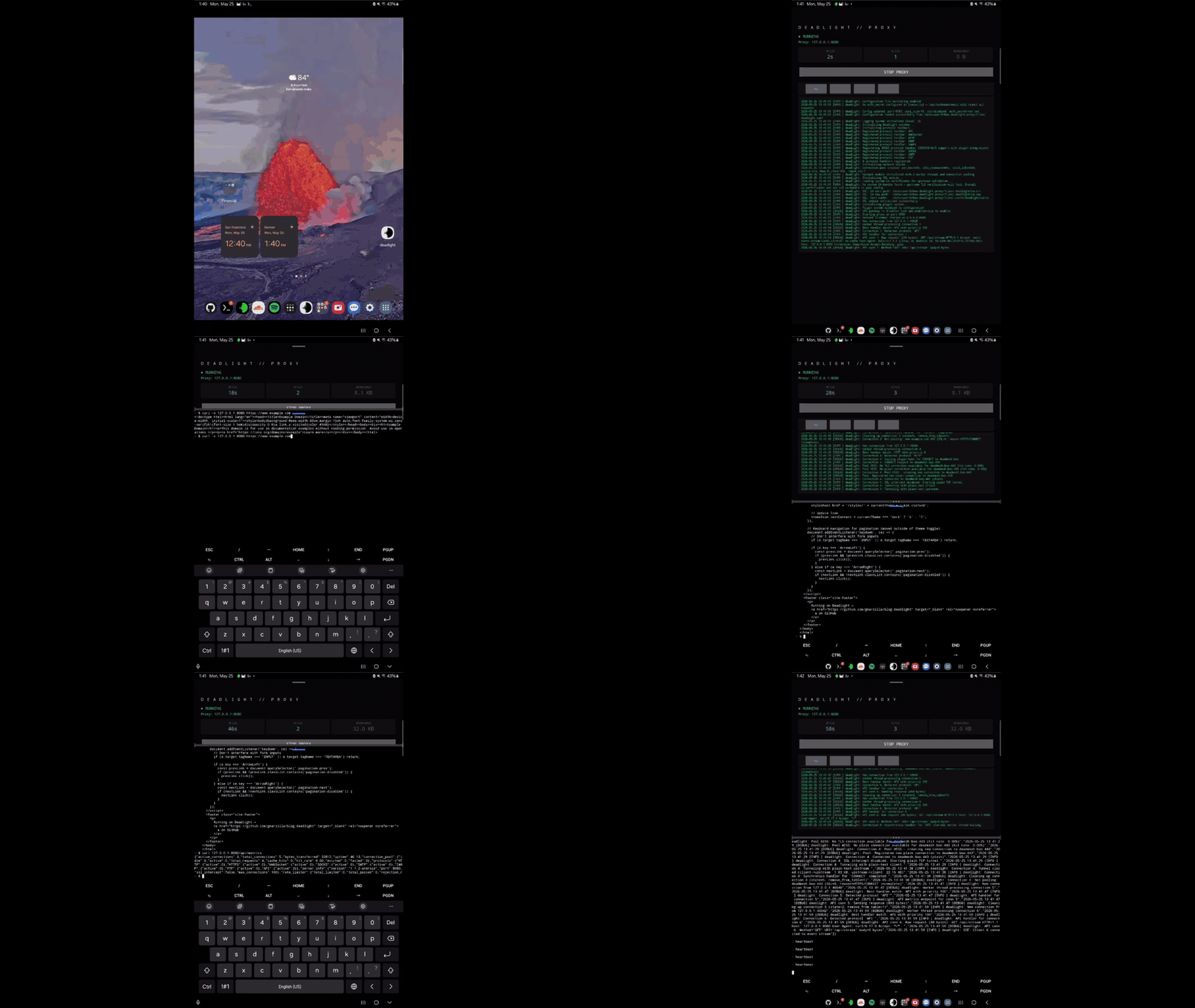
Your device connects to Deadlight as a standard proxy. Deadlight:
- Terminates the connection and parses the protocol
- Fragments the data into ~220-byte chunks
- Transmits over LoRa using Meshtastic's protobuf format
- A gateway node (with real Internet) reassembles the stream
- Forwards your request to the actual destination
Responses follow the reverse path.
Result: Standard applications work over LoRa mesh without modification. You can send email, browse text-heavy sites, or make API calls—just at ~5 kbps with higher latency.